
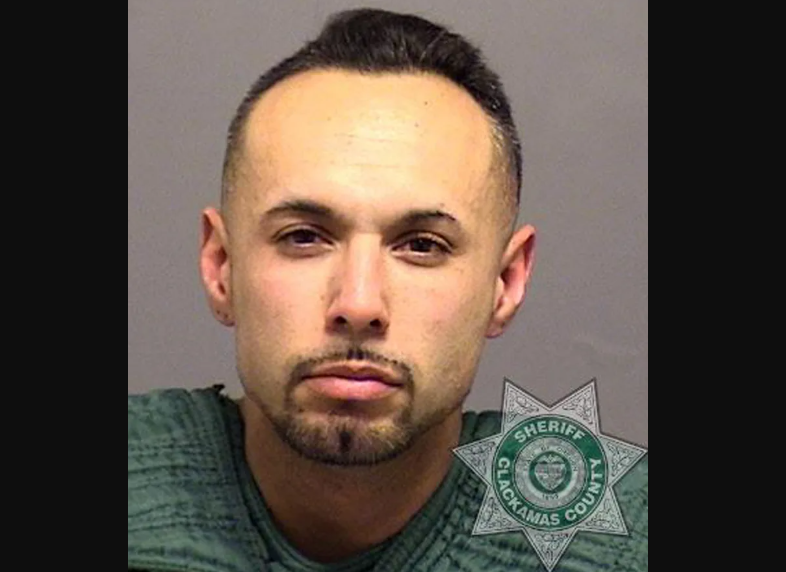
An Oregon man who became obsessed with the belief that his mother was possessed by demons has been sentenced to life in prison for killing her inside the home they shared, nearly two years after she begged him to get help and tried to force him to move out.
Ronald Joseph Kirk, 38, received the sentence Wednesday, November 4, after a Clackamas County jury convicted him of second-degree murder and being a felon in possession of a firearm. He must serve at least 25 years behind bars before becoming eligible for parole.
His mother, 61-year-old Rosa Leyva, was found dead inside her Gladstone home on November 26, 2024, after worried coworkers contacted authorities because she had failed to show up for work.
When police arrived at the house on Southeast Cason Road, Kirk answered the door and told officers his mother was inside and had been unconscious for about a day.
Investigators discovered Leyva sitting at her dining room table in front of her laptop, with a full glass of wine nearby. Pillowcases had been placed over her body, and she had suffered a fatal gunshot wound to the head.
Authorities determined she had been killed around 6:45 p.m. the previous evening.
Kirk remained inside the home following the shooting, according to prosecutors.
“He sat there with his mother’s dead body for a full day,” Senior Deputy District Attorney Rusty Amos told jurors.
As investigators pieced together the events leading up to the killing, they uncovered a disturbing pattern of escalating behavior that had left Leyva increasingly afraid of her own son.
Prosecutors said Kirk struggled with alcohol and drug use, frequently displayed an explosive temper and had developed an obsession with exorcisms and demonic possession.
In the weeks before her death, Leyva confided in a close friend that Kirk believed she was possessed.
Even more troubling, prosecutors presented a voicemail Kirk had left for his own son about a month before the killing. In the message, Kirk claimed his mother was possessed and said he had almost shot her in the head the previous day.
Despite her devotion to her son, Leyva had reached a breaking point. On November 8, 2024, she sent Kirk a text message demanding that he move out.
“You need to leave. I don’t want anyone in my house,” she wrote.
Leyva also contacted Gladstone police for assistance as her concerns about Kirk’s behavior intensified. Officers spoke with her on November 8 and again on November 11.
During the trial, jurors watched home surveillance footage from November 11 showing Leyva pleading with her son to seek help.
“You’re higher than a kite. Get some help. Please,” she told him.
Prosecutors argued that Kirk’s dependence on his mother, combined with her decision to remove him from the house, contributed to the escalating conflict. At the time, Kirk was unemployed, had no money and had nowhere else to live.
Nearly two years after the killing, Leyva’s devastated relatives confronted Kirk during his sentencing hearing.
“These past two years have been the hardest years of our lives,” her younger sister, Michelle Guzman, told the court, according to KGW.
Guzman described the lasting heartbreak of losing a beloved sister, daughter, grandmother and friend whose death had permanently changed their family.
Leyva had dedicated 37 years to the Oregon Department of Justice before taking a position at a medical clinic. Her obituary remembered her as a woman with an infectious laugh who loved shopping for purses and jewelry and caring for animals.
Family members described her as generous, loving and deeply devoted to the people around her, including the son who ultimately took her life.
During the sentencing hearing, Kirk indicated that he intended to appeal his conviction.
His life sentence brings a measure of legal closure to a case marked by repeated warnings, a mother’s growing fear and a tragedy her family believes could have been prevented.
Although Kirk could become eligible for parole after 25 years, his release would not be automatic. He would have to be considered for parole before any possibility of returning to society.
