
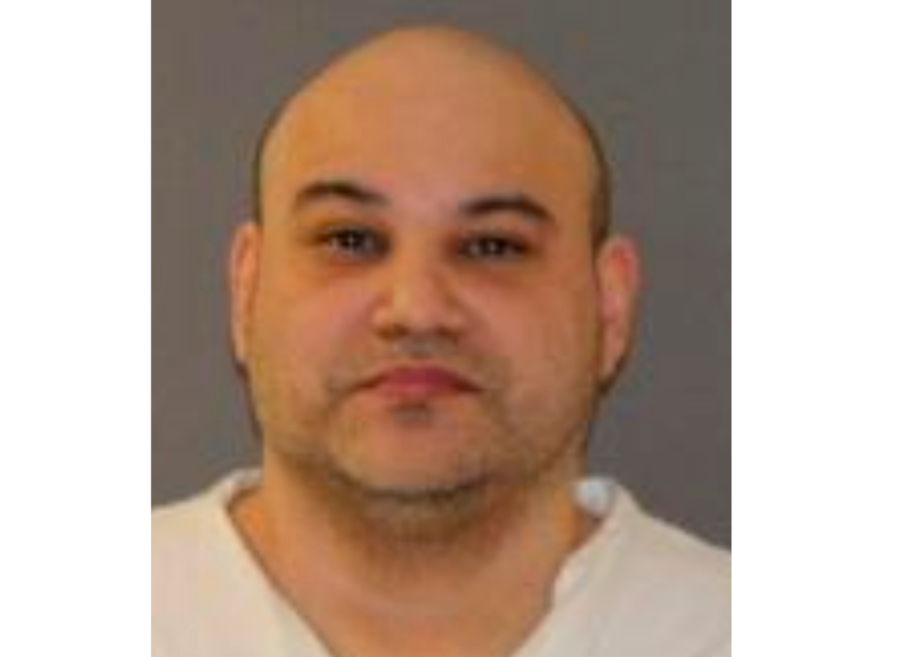
A Texas father convicted of murdering three young children after claiming they were possessed by demons has been executed, nearly 23 years after the horrific killings shocked a small border community.
John Allen Rubio, 46, received a lethal injection Thursday, November 12, at the Texas State Penitentiary in Huntsville. He was pronounced dead at 6:47 p.m., bringing an end to a decades-long legal battle over one of the most disturbing child murder cases in Texas history.
But it was Rubio’s final words that drew renewed attention to the case.
As he lay on the execution chamber gurney, the convicted killer apologized to his family, spoke about finding religion behind bars and expressed his belief that he would soon be reunited with the very children he had murdered.
“I’m not the same person I once was,” Rubio said, thanking prison staff for helping him embrace Christianity.
He also apologized to his common-law wife’s family, acknowledging that nothing could undo the suffering he had caused.
“I can’t change the past,” he said, before adding that he hoped his loved ones would eventually find forgiveness.
In one of his final remarks, Rubio told those gathered that he expected to see his children again in heaven.
The execution came more than two decades after Rubio and his common-law wife, Angela Camacho, killed three children inside their apartment in Brownsville, Texas, on March 11, 2003.
The victims were 3-year-old Julissa Quezada, 14-month-old John Esteban Rubio and 2-month-old Mary Jane Rubio.
John and Mary Jane were Rubio’s biological children, while Julissa was Camacho’s daughter from a previous relationship.
According to court records, Rubio and Camacho fatally stabbed and beheaded the children after Rubio became convinced they were possessed by evil spirits.
Investigators later learned that Rubio had described himself as a chosen figure who believed he was destined to save the world.
The killings horrified the Brownsville community, where the apartment complex became associated with a tragedy that residents struggled to comprehend.
Rubio was convicted and sentenced to death in 2003, but his conviction was overturned in 2007 after an appeals court determined that prosecutors had improperly introduced statements made by Camacho.
He faced a second trial in 2010, during which his attorneys argued that he suffered from severe mental illness and was legally insane at the time of the murders.
Defense experts diagnosed Rubio with paranoid schizophrenia and testified about his delusions involving demons and religious persecution. Prosecutors challenged the insanity defense, arguing that Rubio understood the nature and wrongfulness of his actions.
Jurors rejected the defense and again sentenced him to death.
Camacho, meanwhile, pleaded guilty for her role in the killings and received three concurrent life sentences. She remains incarcerated.
In the years leading up to his execution, Rubio continued pursuing appeals challenging his conviction and death sentence. His attorneys raised questions about his mental health and the reliability of testimony presented during his trial, but their efforts failed to stop the execution.
The Texas Board of Pardons and Paroles also unanimously denied his request for clemency.
While Rubio spent his final hours in Huntsville, relatives of the murdered children gathered more than 300 miles away in Brownsville for an emotional vigil.
The gathering took place at Tres Angeles Park, a memorial built on the former site of the apartment complex where the children were killed.
The building was demolished following the murders, and the property was eventually transformed into a park and community garden dedicated to the three young victims.
Family members, neighbors and other residents came together to pray, light candles and remember the children whose lives ended so tragically.
One of the children’s aunts asked the community to continue supporting the family, explaining that the pain of losing them had never disappeared.
“I ask that you continue to pray for my family because this has not been easy,” she said during the vigil, according to local station KRGV.
As word arrived that Rubio’s execution had been carried out, members of the crowd cheered, marking the end of a legal process that had lasted more than two decades.
Others reflected on the children and the lives they never had the opportunity to live.
Iliana Hernandez, a Brownsville mother who attended the gathering, said the community had never forgotten what happened.
“When something’s done to the people in Brownsville, we remember,” she said.
She also encouraged parents to cherish the time they have with their children, acknowledging how fortunate she was to be able to take her own daughter home that evening.
Rubio’s execution was the eighth carried out in Texas in 2026 and the 37th nationwide.
Although his death closes the criminal case against him, the tragedy continues to affect those who remember Julissa, John and Mary Jane.
