
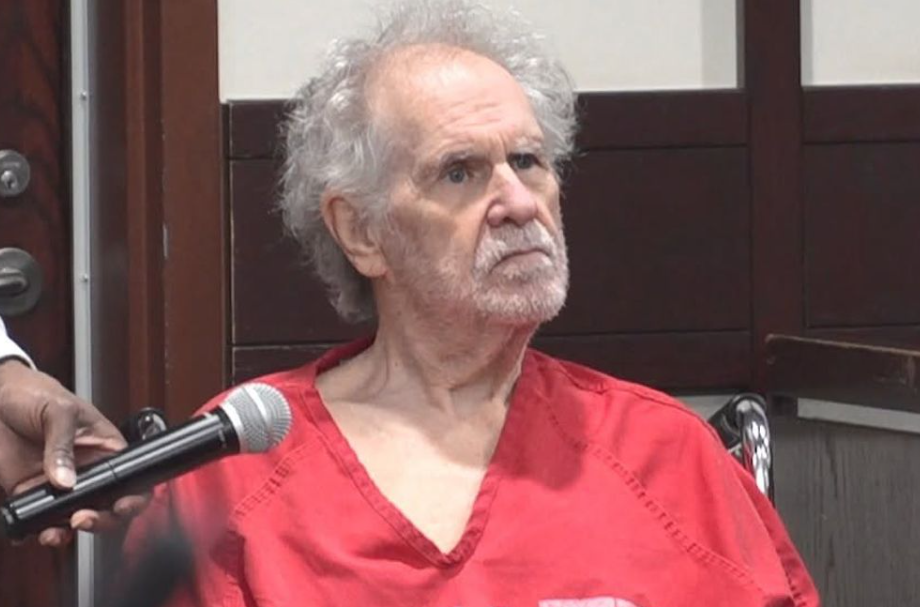
A Florida man accused of killing a woman and concealing her remains in Tampa Bay made an extraordinary offer during his murder trial, telling a judge he would plead guilty and accept life in prison in exchange for one surprisingly simple request: a Philly cheesesteak.
Robert Kessler, 74, stunned a Hillsborough County courtroom Monday, October 26, when he proposed trading a guilty plea for a sandwich, french fries and a Pepsi. The unusual exchange unfolded as jury selection began in his long-awaited trial for the 2021 death of Stephanie Crone-Overholt, a 47-year-old mother whose disappearance led investigators to a disturbing discovery in Tampa’s McKay Bay.
Kessler, who has chosen to represent himself despite having no formal legal training, was discussing his options with Circuit Judge Nick Nazaretian when the possibility of entering an open guilty plea came up. The judge explained that Kessler could avoid a trial by admitting guilt and accepting a life sentence, bringing the nearly five-year-old case to a close.
Rather than immediately accepting or rejecting the suggestion, Kessler appeared to consider it before announcing his unusual condition.
“I’ll do that for a Philly cheesesteak, and an order of fries and a Pepsi,” he told the court.
When Nazaretian asked whether he was serious, Kessler became even more specific, requesting onions and mayonnaise on the sandwich and continuing to discuss the accompanying food and drink. He suggested that his proposal would ultimately benefit the public by avoiding the expense of a lengthy trial.
The judge appeared taken aback by the request, explaining that in nearly four decades of experience, he had never encountered anything quite like it. Although Nazaretian acknowledged that Kessler would receive lunch, he made it clear that offering food in exchange for a guilty plea was out of the question.
“I can’t obviously give food to people to enter a plea,” the judge explained. “That would be wrong in a thousand ways.”
With his proposed arrangement rejected, Kessler abandoned the idea of pleading guilty and asked the court to continue selecting a jury. He reiterated that he wanted the sandwich but understood he was unlikely to receive it.
The bizarre exchange provided an unexpected moment in a case centered on allegations of a devastating crime that has left Crone-Overholt’s family waiting years for answers.
The investigation began in November 2021, when fishermen discovered human remains in McKay Bay, an industrial waterfront area east of downtown Tampa. Authorities eventually identified the victim as Crone-Overholt, who had traveled to Florida from Pennsylvania and had been staying at Kessler’s home before she disappeared.
According to investigators, Crone-Overholt had been living with Kessler and his daughter in the days leading up to her death. Court documents indicate that tensions developed between the two, with Kessler’s daughter reportedly telling detectives that she had witnessed them arguing before the woman vanished.
The daughter also recalled Crone-Overholt asking Kessler for $200 so she could leave the residence, according to an arrest affidavit.
As detectives pieced together her final known movements, they uncovered witness accounts that eventually led them to suspect Kessler.
At least three people reportedly described seeing a man matching his appearance disposing of trash bags in the bay around the time Crone-Overholt disappeared. Investigators later alleged that Kessler had killed the woman and attempted to conceal evidence of the crime.
He was arrested and charged with first-degree murder and abuse of a dead body, allegations he has contested as the case moved through the court system.
Nearly five years later, the prosecution is finally heading to trial, but the proceedings have already been complicated by Kessler’s decision to act as his own attorney.
According to the Tampa Bay Times, Kessler previously had legal representation but insisted on defending himself, despite acknowledging that he has only a high school education and no legal experience. He has also described significant vision problems that make reviewing court documents difficult.
During Monday’s proceedings, Kessler told the judge that he was severely visually impaired and struggled to read materials connected to his defense. Court officials arranged assistive equipment, including headphones and a device intended to help him access documents, while attorneys discussed previous efforts to provide assistance.
The circumstances have added another layer of complexity to an already difficult case, particularly because Kessler faces a mandatory life sentence if convicted of first-degree murder.
His decision to represent himself means he will be responsible for handling major portions of his own defense, although the court must still ensure that proceedings meet constitutional requirements.
For Crone-Overholt’s loved ones, the trial represents a long-awaited opportunity for the allegations surrounding her death to be examined before a jury. The unusual courtroom conversation about a sandwich does not change the seriousness of the charges or the loss suffered by her family.
Following the rejected plea proposal, jury selection continued, with the trial scheduled to proceed Tuesday, October 27.
Whether Kessler’s courtroom remarks were intended as a joke, a genuine attempt to negotiate or something else remains unclear. What is certain is that the judge refused the proposed exchange, and Kessler did not enter a guilty plea.
