
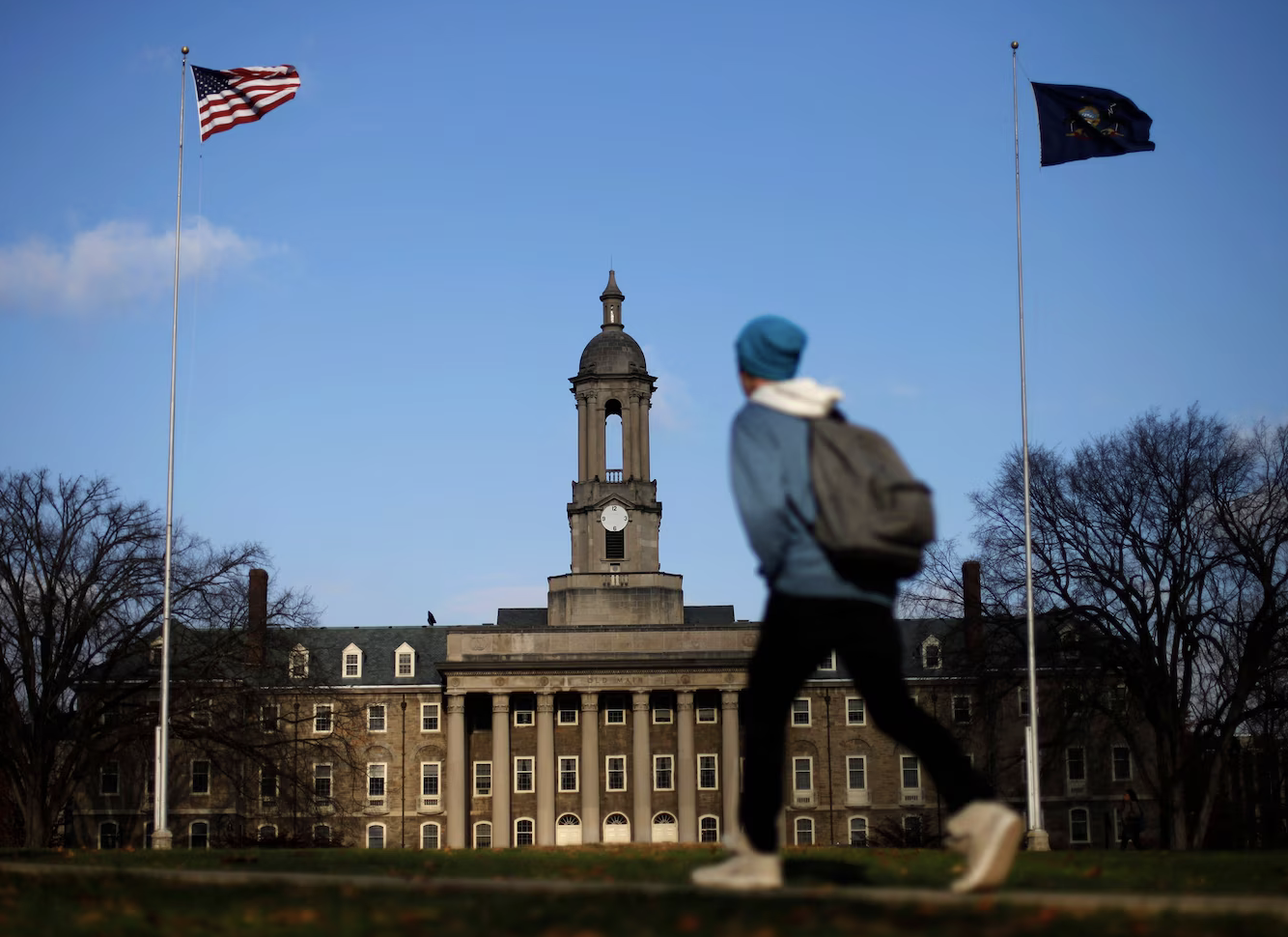
A sprawling cocaine trafficking operation allegedly running through Penn State’s fraternity scene has led to charges against 14 people — including current and former students and the father of one student.
Pennsylvania Attorney General Dave Sunday announced the charges Monday after an investigation authorities dubbed “Operation Drugs Unlimited.”
Prosecutors claim the alleged drug operation revolved around members and pledges connected to two fraternities, with cocaine allegedly being brought into State College, cut and packaged inside fraternity houses and then sold largely to Penn State students.
“This was a coordinated and highly profitable drug-trafficking crew revolving around two senior members of the fraternities, other fraternity brothers, and pledges,” Sunday said.
Authorities made an even more disturbing allegation: Some pledges were allegedly introduced to fraternity life by helping prepare cocaine for sale.
According to Sunday, “cutting and packaging cocaine was, for some pledges, an indoctrination into the fraternities.”
Thirteen current or former Penn State students and one student’s father are facing felony or misdemeanor charges. At least four of the defendants are currently enrolled at the university, according to the attorney general’s office.
Investigators say the alleged trafficking operation was tied to members of Delta Upsilon and Sigma Chi.
Penn State has placed Delta Upsilon on interim suspension. Sigma Chi is not currently recognized as an official fraternity by the university.
The alleged crimes date back to 2023 and 2024, according to Penn State. Both fraternity houses operate off campus.
Authorities allege Agostino Abbatiello and Thomas Robinson acted as major suppliers in the operation and regularly traveled to Philadelphia and New York to obtain large quantities of cocaine.
The drugs were then allegedly taken back to State College, where prosecutors claim they were cut and packaged primarily inside the Delta Upsilon and Sigma Chi fraternity houses.
From there, investigators say the cocaine was distributed mainly to Penn State students, with customers allegedly paying in cash or through payment apps.
Abbatiello and Robinson, along with Mohammed Hurabi and Lars Zeepvat, are facing charges that include felony corrupt organizations, conspiracy and dealing in proceeds of unlawful activity, along with additional offenses.
Robert Zanolla has been charged with felony conspiracy and criminal use of a communication facility, as well as misdemeanor offenses.
Eight other defendants described as student-age face misdemeanor possession and drug paraphernalia charges.
The case also allegedly reached beyond the student population.
Paul Robinson, identified by authorities as the father of one of the students, has been charged with felony tampering and hindering apprehension.
Prosecutors accuse him of trying to conceal evidence, including a safe that allegedly contained drugs and cash, and obstructing investigators.
The investigation was conducted by the Pennsylvania Attorney General’s Office, State College Police Department and the 54th Statewide Investigating Grand Jury.
Penn State officials reacted strongly after the charges became public.
“We are horrified by these serious allegations against current and former students,” Penn State Vice President for Student Affairs Andrea Dowhower said.
She said the university would cooperate with law enforcement and declared that criminal activity and hazing have “no place” at Penn State.
The allegations now leave one of America’s best-known college campuses confronting explosive claims that fraternity houses were being used as hubs for a lucrative cocaine operation — with prosecutors alleging that even pledges were pulled into the drug activity.
